
The development of the manufacturing industry demands not only new innovations but also the ability to understand, analyze, and reproduce existing components. This is where reverse engineering plays a crucial role. This technique has become a widely used method by manufacturing companies to increase efficiency, refine designs, and even develop new products more quickly.
What is Reverse Engineering?
Simply put, reverse engineering is the process of studying a finished product or component to understand its structure, function, and design. The results of this analysis are then used to recreate the component, make improvements, or even develop a better version.
In the manufacturing industry, reverse engineering is usually carried out using precision measuring tools such as calipers, micrometers, 3D scanners, CMM (Coordinate Measuring Machine), or CAD software that is capable of duplicating shapes and dimensions accurately.
Benefits of Reverse Engineering
Reproducing Discontinued Components:
Many older industrial machines have replacement components that are no longer manufactured. Reverse engineering allows these components to be duplicated without relying on the original manufacturer.
Product Quality Improvement
Analysis of existing products allows companies to find design weaknesses and then fix them to produce more durable, lighter, or efficient versions.
Cost and Time Efficiency:
Rather than developing a new design from scratch, reverse engineering speeds up the process by leveraging data from existing products. This can save research time and production costs.
New Product Innovation
Reverse engineering is not only used for reproduction, but also as a first step in developing new technologies by taking inspiration from solutions that have already proven successful.
Reverse Engineering Process in Manufacturing
This process generally consists of several stages:
- Data Collection: Using precision measuring tools to scan components.
- 3D Model Creation: Scanned data is processed into a CAD model.
- Design Analysis: Looks at functional, material, and dimensional tolerance aspects.
- Reproduction / Modification: Components are reproduced to specifications or modified to be better than the original version.
With these steps, reverse engineering can produce components that are identical to or even superior to the original design. In each case, the ultimate goal is to create practical solutions to production and maintenance challenges.

Contact Us Now
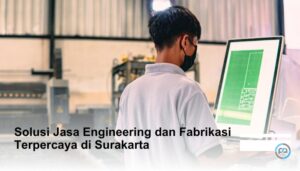
If you’re looking for a competent and trusted engineering and fabrication service provider in Surakarta, PT Patmanunggal Reka Abadi is ready to assist you. Contact us for a consultation, a price quote, or an initial discussion about your project.
Trust your needs to PT Patmanunggal Reka Abadi . With extensive experience and expertise in this field, we are ready to help you achieve optimal operational performance. Contact us today for a consultation and to find the best solution for your needs. Click here to connect with our team of experts and begin your journey to greater operational efficiency!